
Fort Lauderdale Tire Road Service for Trucks RVs Boat Trailers Motorhomes Buses and Box Trucks
- Wonie Cotton
- 10 hours ago
- 9 min read

A flat tire on I-95, U.S. 1, the Turnpike, or a marina access road can stop a full day in minutes. For a passenger car, the delay is frustrating. For a truck, RV, boat trailer, motorhome, bus, or box truck, it can become a serious roadside problem fast.
Large vehicles need more than a basic spare tire change. They need the right equipment, a technician who understands load range and tire size, and a service approach built for heavier vehicles. That is where Fort Lauderdale tire road service for trucks, RVs, boat trailers, motorhomes, buses, and box trucks becomes essential.
Whether the issue is a blowout, a slow leak, a damaged valve stem, or a tire that will not hold air, mobile tire help can reduce downtime and help keep the vehicle, driver, passengers, and cargo safer.
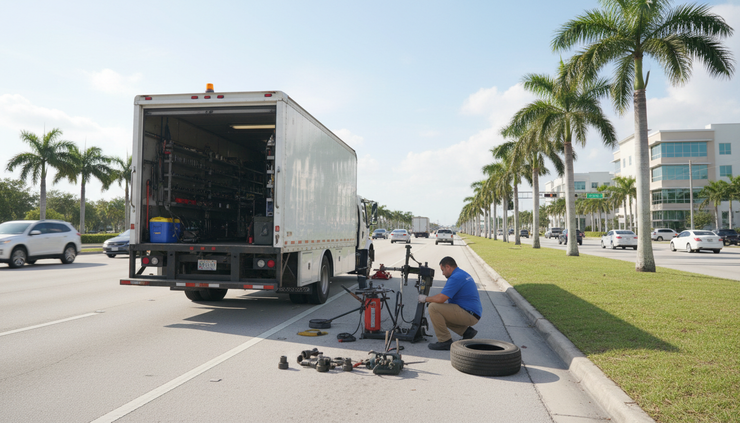
Why roadside tire service matters for heavy vehicles
A roadside tire issue is not always simple. Bigger vehicles carry more weight, use different tire sizes, and often sit higher off the ground. The tire may be mounted on a dual-wheel setup, a trailer axle, or a commercial rim. In some cases, the damaged tire is hot, shredded, or locked under the weight of the vehicle.
That changes the job.
Roadside service for heavy vehicles is usually about three things:
Getting the right tire or repair option to the location
Handling the vehicle safely on the shoulder, lot, dock area, or job site
Reducing the time the vehicle spends disabled
A mobile tire technician can assess whether the tire can be repaired, changed, patched, plugged, inflated, or replaced. Not every tire should go back on the road. Sidewall damage, major tread separation, and heat damage often mean replacement is the safer choice.
For commercial vehicles, time matters too. A box truck stuck during deliveries can throw off a route. A bus tire issue can delay a group. A boat trailer flat can turn a planned launch into a stranded vehicle near a ramp. An RV or motorhome breakdown can leave travelers sitting in heat, traffic, or an unfamiliar area.
Truck tire road service in Fort Lauderdale
Truck tire problems can happen anywhere, from warehouse districts to construction entrances to highway shoulders. A truck that carries tools, freight, equipment, or supplies cannot always be moved easily after a tire failure.
Common truck tire road service calls include:
Blowouts on the highway
Low tire pressure on loaded trucks
Nails, screws, and road debris in the tread
Valve stem leaks
Dual tire problems
Damaged tires after hitting curbs or potholes
The right response depends on the truck and the tire. A light-duty work truck may need a different setup than a heavier commercial truck. Tire size, load rating, wheel position, and vehicle weight all matter.
A good mobile tire service does not just show up and guess. The technician should ask for details before arrival, such as tire size, vehicle type, location, and whether the vehicle is loaded. That helps avoid wasted time and helps the service truck bring the right tools or replacement options.
For drivers, the safest move is to pull as far away from traffic as possible, turn on hazard lights, and avoid standing near the lane side of the vehicle. If the truck is on a highway shoulder, the roadside position can be dangerous even before the tire work begins.
RV and motorhome tire service needs a careful approach
RV and motorhome tires often fail for different reasons than daily driver tires. Many sit for long periods. Sun, heat, age, low pressure, and weight can all weaken a tire even when the tread looks acceptable.
That is one reason RV owners should take tire issues seriously. A motorhome may look ready for a trip, but a tire can still be unsafe if it has cracks, weathering, or internal damage.

Mobile RV tire service can help with:
Flat tires at campgrounds, storage lots, fuel stops, or roadside locations
Tire replacement before a long drive
Air pressure issues
Valve stem problems
Tire damage found during a pre-trip check
Motorhome rear tire or dual tire issues
Motorhome service often requires stronger lifting equipment and careful placement of jacks. The technician must account for the vehicle’s weight and frame points. A poor lift can damage the vehicle or create an unsafe situation.
For RV travelers, it helps to keep tire information available. The tire size is printed on the sidewall. The vehicle’s recommended pressure is often listed on a placard or in the owner’s manual. Having this information ready can speed up the service call.
Boat trailer tire road service around ramps, marinas, and highways
Boat trailers create their own tire problems. They often sit unused, then carry a heavy load over hot pavement. They may be exposed to saltwater, moisture, and sun. Trailer tires can look fine from a distance but still be weak from age or sidewall cracking.
A boat trailer flat can happen:
On the way to a ramp
At a marina
In a storage yard
After leaving a boat launch
On the highway after a long tow
In a driveway before a trip
Boat trailer tire service is different from standard car service because trailer tires are designed for trailer use. The sidewalls and load ratings matter. Using the wrong tire can affect stability and safety, especially while towing at highway speeds.
Another issue is access. A trailer may be parked at an angle, backed near a ramp, loaded with a boat, or positioned in a tight lot. A mobile tire technician needs to work around the location safely and avoid putting the trailer, boat, or towing vehicle at risk.
If a boat trailer tire fails while towing, the driver should slow down carefully, avoid sharp steering, and pull into a safe area. Driving on a flat trailer tire can damage the rim and may harm the trailer fender, hub, or axle area.
Bus tire road service must focus on safety first
A bus tire problem can involve more than the driver. Passengers may be on board, the vehicle may be large, and the tire position may be hard to access. Whether it is a shuttle bus, church bus, school activity bus, tour bus, or private transport bus, roadside tire help needs to be organized and careful.
Bus tire road service may include:
Tire replacement on the roadside
Air service for low tires
Help with outer dual tire issues
Inspection after a blowout
Support in parking lots, terminals, venues, or roadside locations
Passenger safety comes first. If a bus has a tire failure, the driver or operator should move to a safe area if possible. Passengers should stay away from traffic and follow the operator’s safety procedures. The service technician should have room to work and should not be forced into an active travel lane.
For fleet operators, fast bus tire service helps protect schedules. Delays affect routes, events, appointments, and passenger pickup times. A mobile service that understands larger vehicles can help reduce the disruption.
Box truck tire road service for delivery and commercial vehicles
Box trucks are common across Fort Lauderdale. They serve movers, delivery companies, caterers, contractors, retailers, event crews, and local service businesses. When a box truck tire fails, the vehicle may be loaded and on a deadline.

A box truck tire road service call often starts with a few key questions:
What is the tire size?
Is the truck loaded?
Is the damaged tire on the front, rear, inner dual, or outer dual position?
Is the vehicle in a safe location?
Is the rim damaged?
Is there a spare tire available?
The answers help decide whether the tire can be repaired, replaced, or changed with an available spare. Loaded box trucks can be harder to lift safely, so equipment matters.
Box trucks also have business pressure attached to the breakdown. Food can spoil. Furniture deliveries can miss time windows. Contractors can lose jobsite hours. Medical or event supplies may need to arrive on schedule. Quick roadside tire help can keep the problem from growing into a full operational delay.
What to do when a heavy vehicle gets a flat tire
A calm response helps keep a tire problem from becoming more dangerous. The first few minutes matter.
If a tire fails while driving, reduce speed gradually. Keep a firm grip on the steering wheel and avoid hard braking if possible. Move toward the shoulder, a parking lot, or a wide safe area. For trailers, steer smoothly and give the trailer time to settle.
Once stopped:
Turn on hazard lights. Make the vehicle visible right away.
Stay clear of traffic. Do not stand near passing vehicles.
Check the location. Note nearby exits, mile markers, intersections, businesses, ramps, or landmarks.
Look at the tire from a safe distance. Do not crawl under the vehicle.
Call roadside tire service. Provide the vehicle type and tire size if available.
Share access details. Tell the technician if the vehicle is loaded, in a tight lot, at a ramp, or on a highway shoulder.
Do not keep driving on a flat unless there is no safer option. Even a short distance can destroy the tire, damage the wheel, and create more repair costs. On trailers, a shredded tire can also damage wiring, fenders, and body panels.
Information to have ready before calling
A faster service call starts with clear information. Before calling for mobile tire help, gather what you can safely collect.
Useful details include:
Information | Why it helps |
Vehicle type | A truck, RV, bus, boat trailer, motorhome, or box truck may need different equipment |
Tire size | Helps match the correct tire or service option |
Tire position | Front, rear, inner dual, outer dual, or trailer axle affects the work |
Current location | A clear address, exit, ramp, marina, or landmark helps the technician find you |
Load status | A loaded vehicle may need heavier lifting equipment |
Spare availability | A usable spare can change the repair plan |
Wheel or rim damage | Severe damage may require more than a tire replacement |
If the tire size is hard to read, take a photo of the sidewall when it is safe. Do not stand in traffic or crouch near moving vehicles to get it.
Repair or replace depends on the damage
Not every flat tire needs replacement, but not every tire can be repaired. The difference matters more on heavy vehicles because tire failure can cause serious damage.
A tire may be repairable if the puncture is in the tread area and the tire has not been driven flat for too long. A technician can inspect the location and condition before deciding.
Replacement is often the better choice when there is:
Sidewall damage
Tread separation
A blowout
Visible cords
Severe cracking
Heat damage
Rim damage that affected the tire bead
An old or weathered tire
For RVs, trailers, and motorhomes, age and weather exposure matter. A tire can have plenty of tread and still be unsafe. For commercial trucks and buses, load rating and matching tire specs are critical. A tire that physically fits is not always correct for the vehicle.

Why mobile tire service is often better than towing
Towing a large vehicle is not always quick, easy, or necessary. A truck, RV, motorhome, bus, box truck, or loaded trailer may require special towing equipment. That can take longer and cost more than bringing tire service to the vehicle.
Mobile tire road service can solve the issue where the vehicle sits, when the situation allows it. That can be especially helpful in places such as:
Hotel parking lots
Campgrounds and RV parks
Marinas and boat ramps
Delivery stops
Warehouses
Event venues
Construction sites
Storage yards
Highway shoulders
Fuel stations
The best outcome is simple: fix the tire problem safely without moving the disabled vehicle farther than needed.
Preventing tire trouble before it happens
Roadside service is valuable when trouble hits, but prevention still pays off. Heavy vehicles place more stress on tires than passenger cars. Heat, weight, road debris, low pressure, and long storage periods all raise the risk of failure.
A few habits help reduce tire emergencies:
Check tire pressure before longer trips
Inspect sidewalls for cracks and bulges
Look for nails, screws, or uneven wear
Replace aged trailer and RV tires before they fail
Match tires to the correct load rating
Avoid overloading trucks and trailers
Keep valve stems and caps in good condition
Inspect dual tires carefully, including inner positions
For commercial vehicles, tire checks should be part of the regular routine. For RV and boat trailer owners, checks are especially important before the first trip after storage.
Reliable roadside help keeps the trip moving
Tire trouble rarely happens at a convenient time. It shows up during deliveries, family trips, work routes, airport transfers, fishing days, moves, and tight schedules. When the vehicle is larger than a car, the right help matters even more.
Fort Lauderdale drivers and operators need road service that can handle trucks, RVs, boat trailers, motorhomes, buses, and box trucks with the proper equipment and practical roadside experience. A fast response is helpful, but a safe and correct repair is what gets the vehicle back on the road with confidence.
If a tire fails, get to a safe spot, gather the tire and location details, and call for mobile tire service that is prepared for the vehicle you are driving or towing. The right response can turn a major roadside problem into a manageable delay.


Comments