
24 Hour Heavy Duty Tire Service in Hollywood Florida When You Need Fast Help
- Wonie Cotton
- 1 day ago
- 7 min read

A heavy duty tire problem never seems to happen in a convenient spot. It happens on I-95 at night, near a busy loading dock, on a hot afternoon in Hollywood, or while a delivery schedule is already tight. One damaged tire can stop a truck, trailer, bus, RV, or piece of heavy equipment long enough to affect the whole day.
That is why fast mobile tire help matters. When the vehicle is too large to move safely, the right answer is not to limp farther and hope for the best. The right answer is to get the unit secured, find out what failed, and bring the proper tire service to the roadside or job site.
If you need 24 Hour Heavy Duty Tire Service in Hollywood Florida, we can help you get moving again with practical roadside support when time matters.

Heavy duty tire problems need a different kind of response
A passenger car tire issue is frustrating. A heavy duty tire issue can become a safety and logistics problem fast.
Large commercial vehicles carry more weight, travel longer routes, and often run on tight schedules. A tire failure can affect steering, braking, suspension parts, nearby tires, and cargo security. On dual-wheel setups, one bad tire can overload the tire beside it. On trailers, a failure can damage mud flaps, air lines, lights, fenders, or underbody parts.
That is why heavy duty tire service is not just about changing rubber. It is about handling the situation safely and matching the repair to the vehicle.
A proper mobile tire response may involve:
Inspecting the failed tire and nearby tires
Checking whether the wheel, valve stem, or rim is damaged
Removing and replacing a tire at the roadside
Repairing a serviceable tire when safe and appropriate
Helping with tire inflation issues
Supporting trailers, box trucks, semis, buses, RVs, and work vehicles
Advising when a tow or additional mechanical help is the safer choice
For heavy vehicles, the smallest details matter. Tire size, load rating, wheel position, and vehicle type all affect the repair.
Hollywood roads can make tire downtime harder
Hollywood, Florida sits in a busy part of South Florida. Traffic can be heavy on I-95, Florida’s Turnpike, Hollywood Boulevard, Sheridan Street, US-1, and routes connecting toward Fort Lauderdale, Dania Beach, Hallandale Beach, Pembroke Park, Miramar, and Miami.
A disabled truck in this area can block a lane, delay a route, or create a hazard for other drivers. If the problem happens after hours, the stress grows. Shops may be closed. Dispatch may be waiting for updates. Nearby traffic may leave little room to work.
A mobile heavy duty tire service helps because the repair comes to the vehicle when possible. That can reduce the need to move a disabled unit through traffic or wait for a shop to open.
The goal is simple: make the situation safer, diagnose the tire problem, and get the vehicle back in service when the tire issue can be handled on site.

When to stop driving and call for help
Some drivers try to make it to the next exit, yard, or fuel stop. That may feel faster in the moment, but driving on a failed heavy duty tire can cause more damage. It can also create a serious safety risk.
Stop as soon as it is safe if you notice any of these signs:
Sudden vibration
A hard shake through the steering wheel, seat, or trailer may point to a failing tire or tread problem.
Loud thumping
A repetitive thump can mean a tire is separating or running flat.
Visible smoke or rubber smell
Heat can build quickly when a tire is failing, especially under heavy load.
Pulling to one side
A steering tire problem can affect control and should be treated seriously.
Low air pressure warning
A pressure drop on a commercial vehicle should not be ignored, especially when hauling weight.
Visible sidewall damage
Cuts, bulges, exposed cords, and sidewall impact damage often mean the tire is no longer safe to run.
Debris impact
Metal, road debris, curbs, and construction materials can damage a tire even if it does not fail right away.
Once the vehicle is stopped safely, use hazard lights and safety triangles or warning devices according to the rules that apply to the vehicle and location. If the vehicle is in a dangerous spot, follow law enforcement or roadside safety guidance.
What to have ready when you request service
The faster a tire technician understands the situation, the faster the right equipment and tire support can be sent. A few details make a big difference.
Have this information ready if possible:
Your exact location
Share the nearest cross street, mile marker, exit, business name, or GPS location.
Vehicle type
Tell dispatch if it is a semi truck, box truck, bus, RV, trailer, dump truck, utility truck, or heavy equipment.
Tire size
The tire size is printed on the sidewall. Common commercial tire sizes vary, so a photo can help.
Wheel position
Explain whether the problem is on a steer tire, drive tire, trailer tire, lift axle, tag axle, or inside dual.
Load status
A loaded vehicle may require different safety planning than an empty one.
Damage description
Say whether the tire is flat, blown out, losing air, shredded, off the rim, or damaged by debris.
Access conditions
Mention if the truck is on a shoulder, in a yard, at a dock, in a parking lot, or on uneven ground.
Photos can help too. A clear photo of the tire size, the damaged tire, and the vehicle location can save time and prevent confusion.
What mobile heavy duty tire service can do on site
Roadside tire service is built around practical field repairs. The technician arrives with tools and equipment designed for large vehicles, not small passenger cars.
Depending on the tire condition, location, and available tire options, service may include tire replacement, flat repair, valve service, inflation support, wheel removal, wheel installation, and basic tire inspection.
Not every tire can be repaired. A tire with major sidewall damage, exposed cords, severe run-flat damage, or a large blowout usually needs replacement. A technician can inspect the tire and explain the safer option.
Mobile service is especially useful for:
Trucks stopped on a highway shoulder
Trailers with failed tires at a warehouse or loading area
Fleet vehicles that cannot wait until normal shop hours
RVs and buses with large tire sizes
Work trucks that need to return to a route or job site
Equipment staged in lots, yards, or construction zones
The best outcome is a safe repair at the location. If that is not possible, the service call can still help identify the next step, such as bringing a specific tire, moving the unit, or arranging additional support.

Why 24 hour service matters for fleets and drivers
A tire problem at 2:00 p.m. is inconvenient. A tire problem at 2:00 a.m. can feel like a dead end.
Heavy duty vehicles often run outside normal business hours. Freight moves overnight. Buses and shuttles start early. Utility trucks respond after storms. Food, retail, construction, and service routes may run before sunrise or after dark.
Waiting until morning may not be realistic. Cargo may be time-sensitive. A driver may be stuck in an unsafe spot. A trailer may be blocking access to a dock. A work truck may be needed for the next shift.
Round-the-clock tire service gives drivers and fleet managers an option when regular shops are closed.
It also helps reduce uncertainty. Even when the repair takes time, having a service provider responding is better than searching for help while the vehicle sits exposed.
Safety comes before speed
Fast help matters, but safe help matters more. A tire service technician needs room to work, stable ground, and enough visibility to complete the job properly.
If the vehicle is on a highway shoulder or near active traffic, the situation may require extra caution. In some cases, moving to a safer nearby area may be necessary if the vehicle can move without causing more damage. In other cases, it may be better to wait for traffic control, law enforcement, or a tow operator.
Drivers should not stand near traffic while waiting. Stay in a safe area when possible. Use reflective gear if available. Keep clear of the damaged tire, especially if it is hot, smoking, or still under pressure.
A heavy duty tire can hold a large amount of air pressure. Damaged tires can be dangerous. Leave inspection, inflation, demounting, and repair work to trained tire service personnel.
Common causes of heavy duty tire failure
Tires fail for many reasons, and not all failures are obvious before they happen. South Florida heat, long drive times, heavy loads, road debris, and stop-and-go traffic can all add stress.
Common causes include:
Underinflation
Overloading
Punctures from nails, metal, or road debris
Sidewall cuts from curbs or impacts
Tread separation
Valve stem failure
Worn tread
Mismatched dual tires
Heat damage
Previous repairs that failed
Underinflation is one of the most common problems because it creates heat. Heat weakens tire structure and can lead to failure, especially when the vehicle is loaded. Regular pressure checks help, but roadside damage can still happen without warning.
For fleets, tire inspections are not just routine paperwork. They help catch low tread, uneven wear, cuts, bulges, and air loss before a driver ends up stranded.
How to reduce downtime before tire trouble starts
No fleet or driver can prevent every tire failure, but good habits reduce risk.
Build these checks into normal routines:
Walk around the vehicle before every trip
Look for cuts, bulges, low tires, and uneven wear
Check valve stems and caps
Watch for trapped debris between dual tires
Confirm tire pressure with a proper gauge
Replace tires before they reach unsafe wear
Keep tire records for fleet vehicles
Train drivers to report vibration, pulling, or heat smells early
A simple walkaround can catch problems before the vehicle reaches highway speed. It also helps drivers notice fresh damage after leaving a job site, warehouse, port area, or construction zone.
For fleet operators, a clear tire plan helps too. Know who to contact after hours. Keep tire sizes on file. Make sure drivers know what details dispatch needs. That preparation can cut confusion when a tire fails on the road.
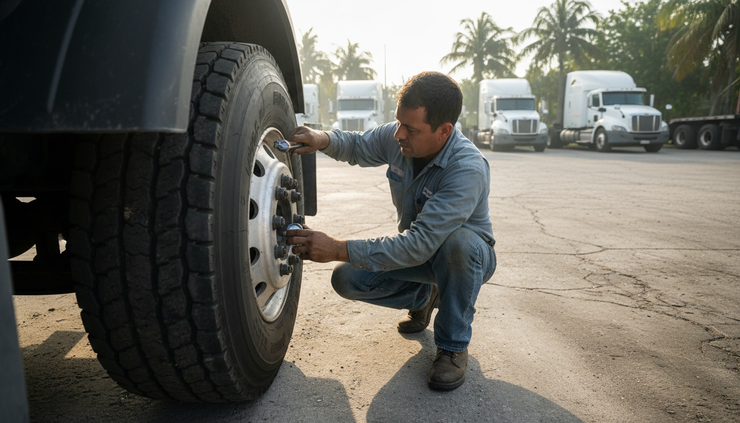
We can help when a heavy duty tire stops your day
When a heavy duty tire fails, quick action makes the situation easier to manage. Get the vehicle to the safest spot available, turn on the hazards, mark the area if required, and gather the tire and location details. Then request mobile tire help that can handle commercial and heavy duty needs.
Hollywood roads stay busy, and tire problems do not follow business hours. Whether the issue is a flat trailer tire, a damaged steer tire, a blown drive tire, or a pressure problem on a work vehicle, the right roadside support can save time and reduce stress.
If a tire problem has you stuck in or near Hollywood, Florida, the next step is simple: stay safe, collect the key details, and get heavy duty tire service sent to your location.


Comments