
Why Did Your Truck Tire Go Flat Near Highway 27 and Snake Road?

A truck tire rarely “just goes flat.” By the time the tire loses air near Highway 27 and Snake Road, something has usually been building for miles: heat, low pressure, road debris, old rubber, too much weight, or damage from a previous impact.
That last few seconds can feel sudden. One minute the truck, box truck, RV, motorhome, or boat trailer feels fine. Then the steering pulls, the body shakes, the tire thumps, or you hear the sharp slap of rubber breaking apart.
Near highways, ramps, rural roads, and service roads, flat tires are especially common because vehicles run hotter, faster, and heavier. If you are near an area with debris, broken pavement, construction traffic, or strips of blown tire on the shoulder, the risk goes up fast.

The flat may have started before you reached Highway 27 and Snake Road
Most tire failures begin quietly. A nail, screw, valve leak, or weak sidewall can let air escape slowly. At lower speeds, the tire may still feel normal. At highway speed, the tire flexes more. That flex creates heat. Heat weakens the rubber and internal belts.
Once the tire gets hot enough, it can fail quickly.
That is why drivers often say, “It was fine a minute ago.” The tire may not have been fine. It may have been running low for a while, then finally gave up when speed, load, and heat peaked.
This is common on:
Pickup trucks carrying tools, materials, or trailers
Box trucks making delivery runs
RVs and motorhomes loaded for long trips
Boat trailers headed to or from the water
Dual-wheel trucks where the inside tire is hard to inspect
If one tire is low, the others may be under extra stress too. On a dually, the paired tire may carry more weight after one starts losing air. That can damage both tires before the driver notices.
Road debris is a major suspect
Highway shoulders collect sharp, heavy, and dangerous debris. Near busy roads, service access points, and intersections, tires may run over objects that are hard to see from the cab.
Common debris includes:
Nails and screws from work trucks
Metal scraps and broken straps
Glass and sharp plastic
Rocks, bolts, and trailer parts
Pieces of blown tire tread
Drivers often call chunks of tire tread on the road “road alligators.” They look harmless until a heavy truck or trailer hits one at speed. A road alligator can slap the undercarriage, rip wiring, damage a fender, or strike another tire.
It can also hide sharper debris underneath.
If your tire went flat near a spot where you saw shredded rubber, do not assume the tread chunk caused the flat by itself. It may have been part of a larger debris field. A nail, piece of steel belt, or broken metal strip may have punctured the tire first.
Heat can turn a small problem into a blowout
Heat is one of the biggest reasons truck tires fail. A tire builds heat every time it flexes. That is normal. The problem starts when the tire is underinflated, overloaded, damaged, or very old.
A low tire flexes more than it should. More flex means more heat. More heat breaks down the tire from the inside.
This is why a tiny air leak can become a blown truck tire on a highway run. The tire may survive city speeds, then fail after several miles at higher speed.
Heat risk rises when:
The truck is heavily loaded
The tire pressure is below spec
The road surface is hot
The vehicle runs for long stretches without stopping
The tire is old, even if the tread looks decent
The tire has been repaired before
The trailer has been sitting for months
RV and motorhome tires are especially vulnerable because they often age out before they wear out. A tire can have plenty of tread and still be unsafe if the rubber has dried, cracked, or weakened inside.
Boat trailer tires face a different problem. They may sit for long periods, then get hauled at highway speed while loaded. Add sun exposure, saltwater, curb strikes at ramps, and low pressure, and a flat near the highway becomes much more likely.
Low air pressure is the cause drivers miss most often
Underinflation is not always obvious by sight, especially on commercial tires, box truck tires, and RV tires. A tire can be dangerously low and still look round.
That is why checking with a gauge matters.
Low pressure can happen because of:
A puncture
A leaking valve stem
A loose valve core
A cracked wheel
A bead leak
Temperature changes
Slow leakage over time
For trucks and trailers, pressure should match the vehicle’s load and tire rating. The number molded into the tire sidewall is usually the maximum cold pressure, not a universal target for every setup. The safer reference is the vehicle placard, fleet spec, or tire and load chart for that vehicle.
For RVs and motorhomes, weighing the vehicle when loaded can help owners choose the right pressure within the tire maker’s guidelines. Guessing is risky because one side of the vehicle may carry more weight than the other.
Overloading can destroy a good tire
A tire has a job limit. When the load is too heavy, the tire runs hotter and flexes harder. Even a new tire can fail if it carries more weight than it was built to handle.
This comes up often with:
Box trucks loaded unevenly
Moving trucks packed to the roof
Work trucks carrying tools, fuel, and equipment
RVs with full water tanks and storage bays
Boat trailers with extra gear in the boat
Utility trailers with heavy cargo at the rear
The load does not have to exceed the whole vehicle rating to hurt a tire. Sometimes one axle, one side, or one tire carries too much because the weight is uneven.
A boat trailer is a good example. If the boat sits too far back, the trailer may sway and overload one set of tires. If the trailer has been modified, fitted with the wrong tire size, or loaded with extra coolers, batteries, and fuel, the tires may be doing more work than the owner realizes.
Impact damage may show up later
Not every tire failure happens at the moment of damage. A pothole, curb, median edge, or construction plate can bruise the inside of a tire. The sidewall may look fine from the outside, but the internal belts can be damaged.
Later, after miles of heat and flexing, the tire separates or blows.
This delayed failure is common after:
Hitting a pothole with a loaded truck
Rubbing a curb with a box truck
Clipping a driveway edge with a trailer tire
Running over broken pavement near a ramp
Driving on a flat tire for a short distance
If the tire has a bubble, bulge, exposed cord, or split sidewall, it should not be driven. That is not a “watch it for a while” issue. It needs replacement.

Valve stems and wheels can be the hidden problem
Sometimes the tire itself is not the main failure point. Air can escape through the valve stem, valve core, bead area, or wheel.
A leaking valve stem may lose air slowly until the tire overheats. A cracked wheel can do the same. Corrosion around the bead can also create a slow leak, especially on older wheels or trailer rims that see water, mud, or salt.
Signs of a valve or wheel leak include:
Tire loses air again after being filled
No nail or puncture is found
Air bubbles appear near the valve or rim when checked with soapy water
Tire pressure drops after sitting overnight
The leak gets worse while driving
For a box truck tire or motorhome tire, this problem can be easy to overlook because the tire is large and stiff. A proper roadside inspection should check the tire, valve, wheel, and neighboring tires.
Trailer tires fail for their own reasons
Boat trailers and utility trailers have different tire stress than the tow vehicle. Trailer tires often sit unused, carry heavy loads, and scrub sideways during tight turns.
A trailer tire can go flat near Highway 27 and Snake Road because of:
Age cracking from sitting outdoors
Low pressure from storage
Bearing heat spreading to the wheel area
Tire scrub during sharp turns
Overloading
Wrong tire type
Damage from ramps, gravel, or curbs
Trailer tires should be checked before every longer trip. That includes pressure, tread, sidewall condition, lug nuts, and wheel bearings. A hot hub or burning smell can point to a bearing problem, not only a tire problem.
If one boat trailer tire fails, the tire on the other side may be the same age and condition. Treat a single failure as a warning to inspect the whole trailer.
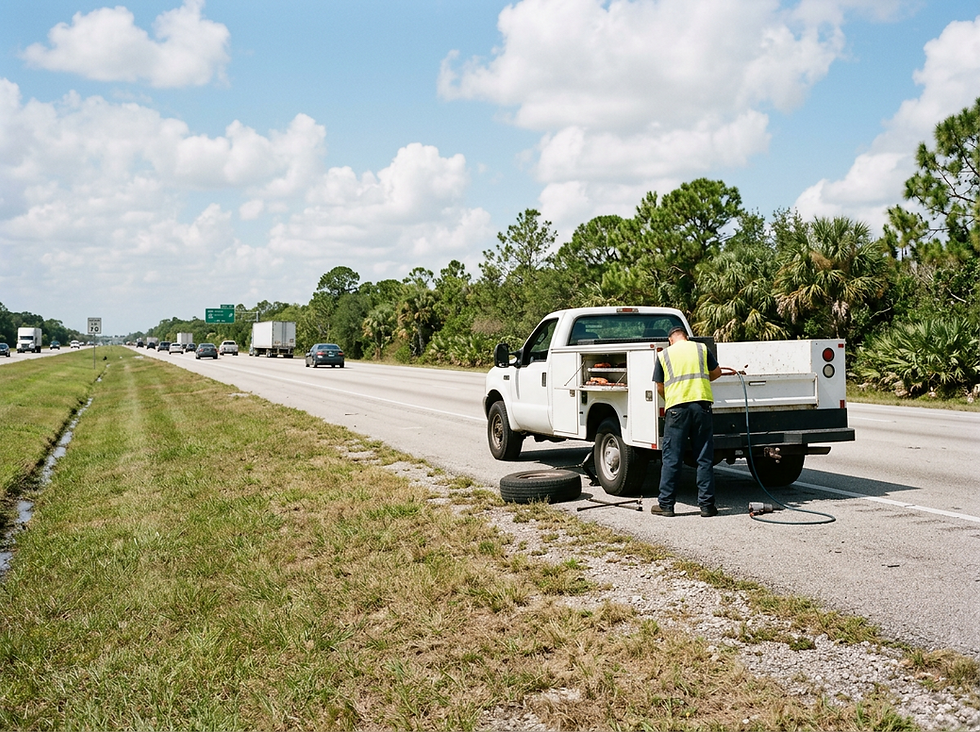
What to do right away after the tire goes flat
A flat or blowout on a truck, RV, or trailer is stressful, but the first moves are simple.
Keep the vehicle steady.
Do not jerk the wheel. Hold firm, ease off the throttle, and let the vehicle slow down under control.
Avoid hard braking if possible.
Hard braking can make the vehicle pull or sway, especially with a trailer.
Move to a safe shoulder or lot.
Get as far away from traffic as you can. A wider shoulder, exit ramp area, gas station, or parking lot is safer than a narrow roadside.
Turn on hazard lights.
Make the vehicle visible. If it is safe, place reflective triangles behind the vehicle.
Do not crawl under the vehicle near traffic.
A roadside shoulder is dangerous. Passing vehicles create wind, noise, and risk.
Inspect from a safe distance.
Look for smoke, shredded rubber, rim damage, leaking fluids, or hanging body panels. If the tire damaged brake lines, wiring, or fenders, do not continue driving.
A spare may work for a pickup or small trailer, but many box trucks, RVs, and motorhomes need roadside tire service. Large tires are heavy, high pressure, and often mounted with commercial equipment.
When you need roadside tire service instead of a spare
Some drivers can change a small trailer tire in a safe parking lot. A loaded box truck, motorhome, or commercial truck is a different situation.
Call for help when:
The tire is shredded or separated
The wheel is damaged
The vehicle is too heavy for your jack
The flat is on the traffic side
The spare is missing, old, or underinflated
The tire size is commercial or hard to handle
There is damage to the fender, brake line, or suspension
You are towing a boat or trailer in an unsafe spot
A proper RV tire road service can bring the right equipment, check the tire size, mount or replace the tire when possible, and help keep the vehicle off the road longer than necessary. For commercial vehicles, they may also inspect the paired tire, valve stems, and wheel condition.
The key is giving clear information when you call. Share:
Vehicle type
Tire size from the sidewall
Single or dual wheel setup
Loaded or empty status
Exact location and direction of travel
Whether the tire is front, rear, inside dual, trailer, or steer tire
Any visible wheel or body damage
If you are near Highway 27 and Snake Road, include the nearest mile marker, cross street, exit, business, or GPS pin. Roadside providers can find you faster when the location is specific.
Can you drive a short distance on the flat?
Usually, no. Driving on a flat tire can destroy the tire, damage the rim, and create more danger. On a heavy truck or RV, it can also damage the wheel well, brake lines, suspension parts, or body panels.
A few yards to reach a safer shoulder may be necessary. A few miles to “make it to the next stop” can turn a repairable puncture into a major bill.
With dual rear wheels, some drivers think the other tire can carry the load. That is risky. The remaining tire may already be overloaded, overheated, or damaged. Driving on one flat dual can ruin both tires and the wheel.
How to reduce the chance of another flat
A roadside flat is a warning sign. Before the next trip, check more than the failed tire.
Use this quick prevention list:
Check cold tire pressure with a quality gauge
Inspect sidewalls for cracks, bulges, and cuts
Look between dual tires for debris
Confirm tires match the load rating needed
Replace aged tires before long highway trips
Keep valve caps installed
Inspect trailer hubs and bearings
Balance loads side to side and front to rear
Avoid running over road gators and shoulder debris
Stop after hitting a pothole or curb and inspect the tire
For fleets, written tire checks help. For RV owners, a tire pressure monitoring system can give early warning. For boat trailers, checking pressure before leaving home and before leaving the ramp can prevent many roadside failures.
The real reason your tire went flat
The answer may be one obvious puncture, or it may be a chain of small problems. A screw caused a slow leak. Low pressure created heat. Heat weakened the tire. Highway speed finished the job.
That pattern explains many failures near busy roads like Highway 27 and Snake Road.
The safest response is to treat the flat as more than an inconvenience. Get the vehicle out of traffic, avoid driving on the damaged tire, and have the whole wheel position inspected. For trucks, box trucks, motorhomes, RVs, and boat trailers, the tire that failed is only part of the story. The next tire may already be under stress.
A flat tire stops the trip for a while. A careful inspection helps make sure it does not stop the next one too.

Comments