
24 Hour Mobile Tire Repair Near Pembroke Pines Hollywood and Davie for All Vehicles

A flat tire rarely happens at a good time. It happens on the shoulder of I-75, in a marina parking lot with a loaded boat trailer, outside a jobsite before sunrise, or late at night when a family is trying to get home. When the vehicle cannot move safely, towing is not always the best first option. A skilled mobile tire technician can often bring the repair directly to the vehicle.
That is the value of 24 hour mobile tire repair near Pembroke Pines, Hollywood, and Davie. Whether the problem is on a car, SUV, RV, semi truck, motorhome, box truck, charter bus, boat trailer, or construction machine, the goal is simple: get the tire assessed, repaired when safe, and get the vehicle moving again with less downtime.
South Florida traffic, heat, rain, construction debris, and long highway stretches can be hard on tires. Around Pembroke Pines, Hollywood, and Davie, drivers need help that is available 24 hours a day, 7 days a week, not only during shop hours.

Mobile tire repair brings the shop to the vehicle
A tire problem can stop everything. For a daily driver, it means missed work, delayed pickups, or a long wait on the shoulder. For a commercial vehicle, it can mean a missed delivery, an unhappy passenger group, or equipment sitting idle while a crew waits.
Mobile tire repair solves one of the biggest problems first: the vehicle does not need to be driven on a damaged tire. Driving even a short distance on a flat can destroy the tire, damage the wheel, and create a safety risk. It can also turn a repairable puncture into a full replacement.
A mobile tire technician can come to many common locations, including:
Residential driveways and apartment parking lots
Gas stations and shopping centers
Job sites and work yards
Marina lots and boat ramps
Highway shoulders, when it is safe and accessible
Truck stops and commercial loading areas
RV parks and storage facilities
The service starts with a proper inspection. The technician checks the tread area, sidewall, valve stem, wheel condition, and air loss pattern. If the tire can be repaired safely, the repair can often be completed on-site. If the tire is not safe to repair, the technician can explain why and help with the next practical step.
The right help for cars SUVs and everyday drivers
For cars and SUVs, tire trouble usually comes without warning. A nail, screw, curb impact, pothole, leaking valve stem, or slow air loss can turn into a stressful situation fast.
Mobile tire repair is especially useful when the vehicle is parked at home or work and the tire is too low to drive on. Instead of risking more damage, the technician can inspect the tire where it sits.
Common car and SUV tire issues include:
Punctures in the tread area
Slow leaks from small objects
Valve stem leaks
Bead leaks from dirt, corrosion, or impact
Tire pressure loss after hitting debris
Damaged tires caused by potholes or curbs
Not every tire can be repaired. A puncture in the sidewall, a large cut, exposed cords, severe uneven wear, or damage from driving flat may make the tire unsafe. A good technician will not patch a tire just to send it back on the road. Safe repair comes before convenience.
Drivers near Pembroke Pines, Hollywood, and Davie often move between highways, neighborhoods, beaches, schools, shopping centers, and business districts. A fast mobile response can keep a small tire problem from becoming an all-day interruption.
Boat trailers need special tire attention
Boat trailer tires face a unique kind of wear. They may sit for long periods, then carry heavy loads in hot weather. They also deal with water, salt, sun exposure, and ramps that put stress on the tires and bearings.
A flat boat trailer tire is more than an inconvenience. It can block a ramp, delay a trip, or leave the boat stranded in a parking lot. If the trailer is loaded, changing the tire can also be difficult without the right jack, tools, and experience.
Mobile tire repair for boat trailers can help with:
Flat trailer tires in storage yards
Tire failures near boat ramps
Slow leaks before a planned trip
Damaged valve stems
Tire changes when a spare is available
On-site inspection before towing
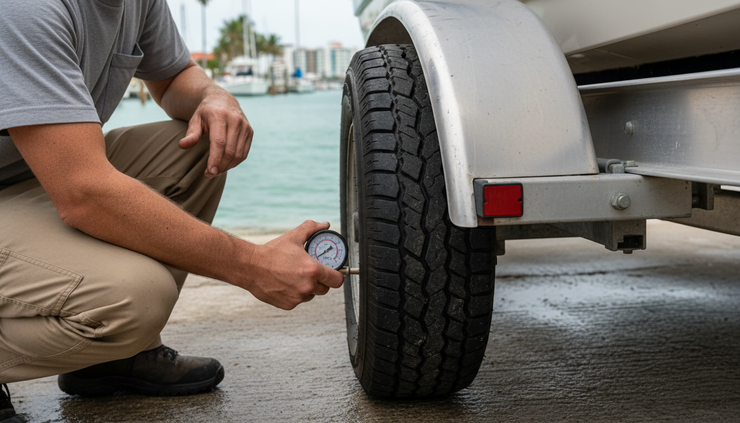
Boat trailer tires should be checked before every trip. The tire may look fine at a glance but still be underinflated, weather-cracked, or overloaded. Heat builds quickly in an underinflated trailer tire, especially during highway driving.
A mobile technician can inspect the damaged tire and the remaining tires. That helps reduce the chance of fixing one flat only to have another tire fail a few miles later.
RV and motorhome tire service protects the whole trip
RVs and motorhomes carry more than passengers. They carry food, gear, water, luggage, appliances, and sometimes a tow vehicle. Tire problems on a motorhome or RV can be serious because of the weight involved.
A tire issue on an RV should be handled with care. The technician needs the right tools, the right jack points, and a clear understanding of heavy vehicle safety. A roadside RV tire repair or tire change is not the same as changing a small car tire in a driveway.
Mobile tire repair can be useful for:
Motorhomes parked in storage
RVs at campgrounds or parks
Class A, Class B, and Class C motorhomes
Travel trailers and fifth wheels
RVs with slow leaks before a long drive
Tire problems discovered during pre-trip checks
RV owners often discover tire trouble after the vehicle has been sitting. Tires can age, lose pressure, or develop cracks even with low mileage. Sun and heat make this worse. Before a trip, it helps to check tire pressure when the tires are cold, inspect sidewalls, and look for uneven wear.
If a tire has visible cracking, swelling, deep cuts, or tread separation, repair may not be safe. The technician should explain the condition clearly and recommend the safest option.
Semi trucks box trucks and charter buses cannot wait all day
Commercial vehicles lose money when they sit. A semi truck with a tire issue can delay freight. A box truck can miss scheduled stops. A charter bus with passengers needs safe, professional service as soon as possible.
For heavy-duty vehicles, mobile tire work requires the right equipment and experience. These vehicles often use larger tires, higher torque, heavier wheels, and different service requirements than passenger vehicles.
Mobile tire support can help with:
Vehicle type | Common situations | Why mobile service helps |
Semi trucks | Roadside flats, yard service, slow leaks | Reduces downtime and avoids unnecessary towing |
Box trucks | Delivery delays, loading dock tire issues | Helps keep routes moving |
Charter buses | Passenger delays, tire pressure loss | Supports safety and schedule recovery |
Work trucks | Jobsite flats, damaged tires from debris | Keeps crews and equipment active |
Heavy vehicles need more than a quick patch. The tire position, load, tire type, wheel condition, and damage location all matter. A front steer tire issue is not treated casually. A good technician will look at the full situation and avoid unsafe shortcuts.
For fleet operators, after-hours availability matters. Tire failures do not follow a 9-to-5 schedule. A truck can leave a yard with good pressure and still pick up debris miles later. Around high-traffic corridors near Pembroke Pines, Hollywood, and Davie, having access to 24/7 tire help can keep a delay from growing into a missed job.

Construction equipment tire repair takes real experience
Construction sites create tough tire conditions. Sharp debris, rebar, nails, broken concrete, uneven ground, and heavy loads can damage tires quickly. When construction equipment cannot move, the whole job may slow down.
Mobile tire repair for construction equipment can help with machines and support vehicles used on jobsites, such as:
Skid steers
Backhoes
Loaders
Dump trucks
Compact equipment trailers
Utility trucks
Service vehicles
The approach depends on the equipment and tire type. Some tires are pneumatic, some are foam-filled, and some require replacement rather than repair. The technician must identify what kind of tire is being serviced before starting work.
Jobsite tire service also requires attention to safety. The ground must be stable, the equipment must be secured, and nearby workers need to stay clear of the service area. Heavy tires and powerful tools can create real hazards if handled poorly.
The main benefit is reduced downtime. Instead of transporting equipment away from the jobsite, mobile service can often address the issue where the machine sits.
What to do while waiting for mobile tire repair
A few simple steps can make the situation safer and help the technician work faster when they arrive.
If the tire problem happens while driving, slow down carefully. Avoid hard braking if possible. Pull over to the safest available area, away from travel lanes. Turn on hazard lights. Stay out of traffic. If the location feels unsafe, call local roadside or emergency support as needed.
Before the technician arrives, gather basic details:
Vehicle type and tire size if visible
Exact location or nearest landmark
Whether the tire is flat, leaking, shredded, or off the bead
Whether a spare tire is available
Whether the vehicle is loaded
Any special access issues, such as gates, ramps, or parking restrictions
For trucks, buses, RVs, trailers, and construction equipment, the load matters. A loaded trailer or commercial truck may require different equipment than an empty one.
Do not remove lug nuts, crawl under a vehicle, or try to lift a heavy vehicle without proper equipment. Also, avoid using temporary sealants unless there is no other safe option. Sealants can make later repair more difficult and may affect tire pressure monitoring sensors on some vehicles.
How technicians decide whether a tire can be repaired
A safe tire repair depends on the location and type of damage. In many cases, a puncture in the tread area can be repaired if it is not too large and the tire has not been driven while flat. Damage to the shoulder or sidewall is usually not repairable because those areas flex heavily while driving.
A technician will usually check:
Where the damage is located
How large the puncture or cut is
Whether the tire was driven underinflated
Whether the sidewall is cracked or bulging
Whether the tread is worn too low
Whether there is internal damage
Whether the wheel or valve stem is leaking
The best repair is not just about holding air for a few minutes. It needs to hold up under real driving conditions. That is why professional judgment matters.
A quick plug may seem convenient, but some repairs require dismounting the tire for an inside inspection. For larger vehicles, the repair method and safety limits can vary based on tire size, load rating, and use.
The right answer is the safe answer, even if that means replacing the tire instead of repairing it.

Why 24 hour service matters in South Florida
Tire problems do not wait for daylight. A charter bus can pick up a puncture after an evening event. An RV can lose air before an early trip. A semi truck can discover a flat during a night delivery. A boat trailer can fail after a late return from the water.
Around Pembroke Pines, Hollywood, and Davie, drivers deal with busy highways, local roads, sudden rain, heat, and constant movement between residential, commercial, and recreational areas. Tire trouble in these conditions needs a fast, practical response.
A dependable mobile tire team should be ready for different vehicle types, not only standard passenger cars. That means carrying proper tools, asking the right questions, understanding load and safety concerns, and knowing when a tire should not be repaired.
When choosing mobile tire help, look for a service that offers:
True 24/7 availability
Experience with passenger, commercial, trailer, RV, and heavy-duty tires
Clear communication before arrival
Safe work practices on roadsides and jobsites
Honest repair decisions
The right equipment for the vehicle
The best mobile tire repair service does more than inflate a tire and leave. It helps drivers make a safe decision, reduces downtime, and gets the vehicle back in service when possible.
Keep moving with expert mobile tire help
A flat tire can stop a family trip, a delivery route, a construction crew, a charter schedule, or a day on the water. The faster the right technician reaches the vehicle, the sooner the problem can be handled safely.
For cars, SUVs, boat trailers, RVs, semi trucks, motorhomes, box trucks, charter buses, and construction equipment, expert mobile tire repair near Pembroke Pines, Hollywood, and Davie is a practical solution when the vehicle cannot come to the shop.
The key is simple: do not risk driving on a damaged tire, and do not trust heavy tire work to guesswork. Get the tire inspected, repair it only when it is safe, and keep the number of a 24-hour mobile tire expert ready before the next flat happens.


Comments